What sports reliability really means
Reliability for sports means three things: the channel opens in seconds, the picture holds through the whole game, and the sound stays in sync with the action. A service that opens ESPN in two seconds on a Tuesday but takes thirty seconds on a Sunday is not reliable — it is lucky on Tuesdays. A service that plays the first half clean and freezes in the fourth quarter is not reliable either, because the fourth quarter is the only part that matters. The test is always the same: a live game, at peak time, watched to the final whistle.
Each sport stresses the service differently. The NFL spikes hardest at kickoff, when millions start streaming at once. The NBA stresses the picture with fast breaks and constant motion. Baseball stresses the guide, with 162 games per team and start times that shift with rain delays. Soccer stresses the early mornings, with Premier League games at 7:30 AM Eastern. A service that is reliable for all four is built differently from one that is reliable for one — it has spare capacity, balanced servers, and technicians watching the load. Start the free 24-hour trial on a game day and judge it by the final whistle.
NFL: the Sunday test
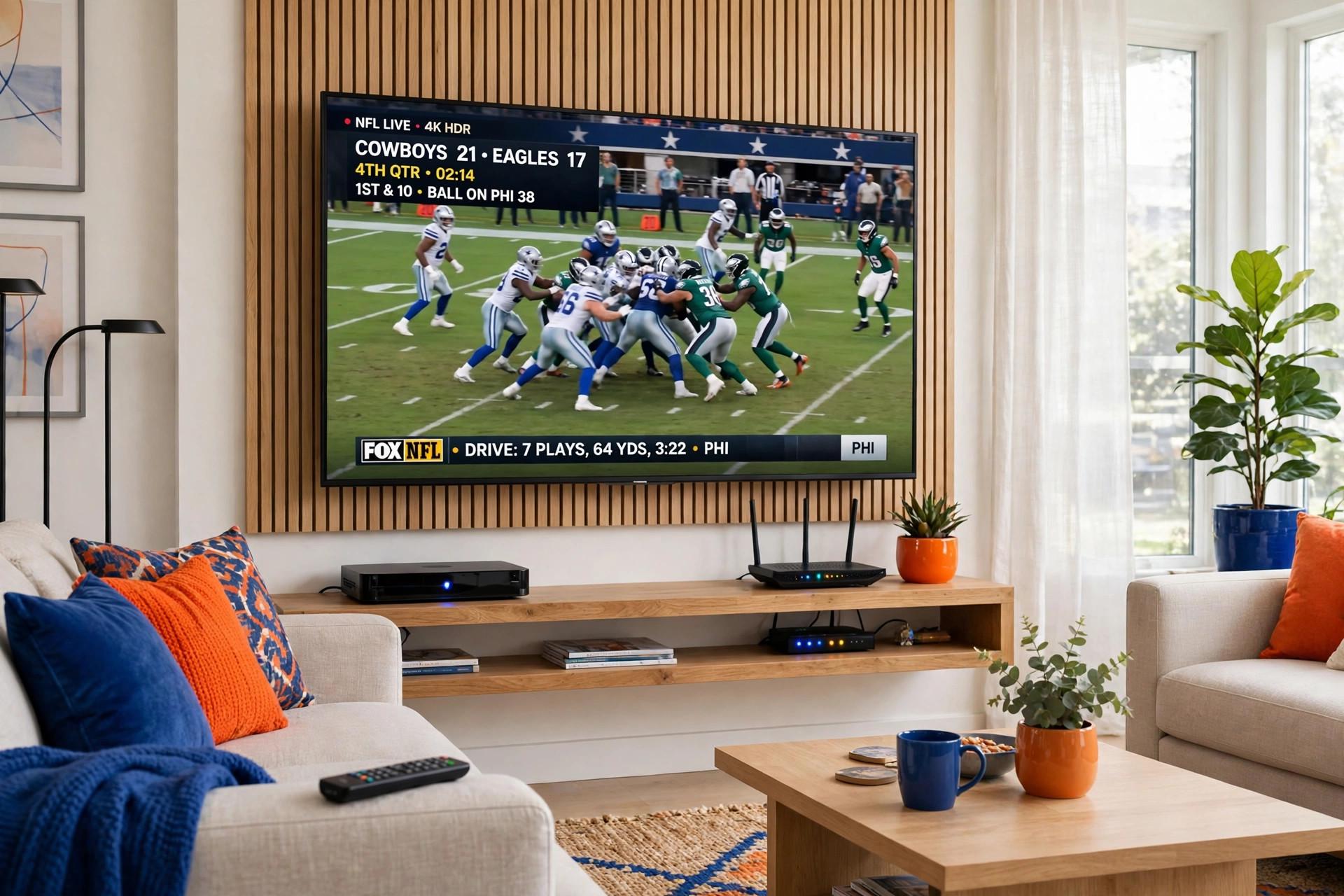
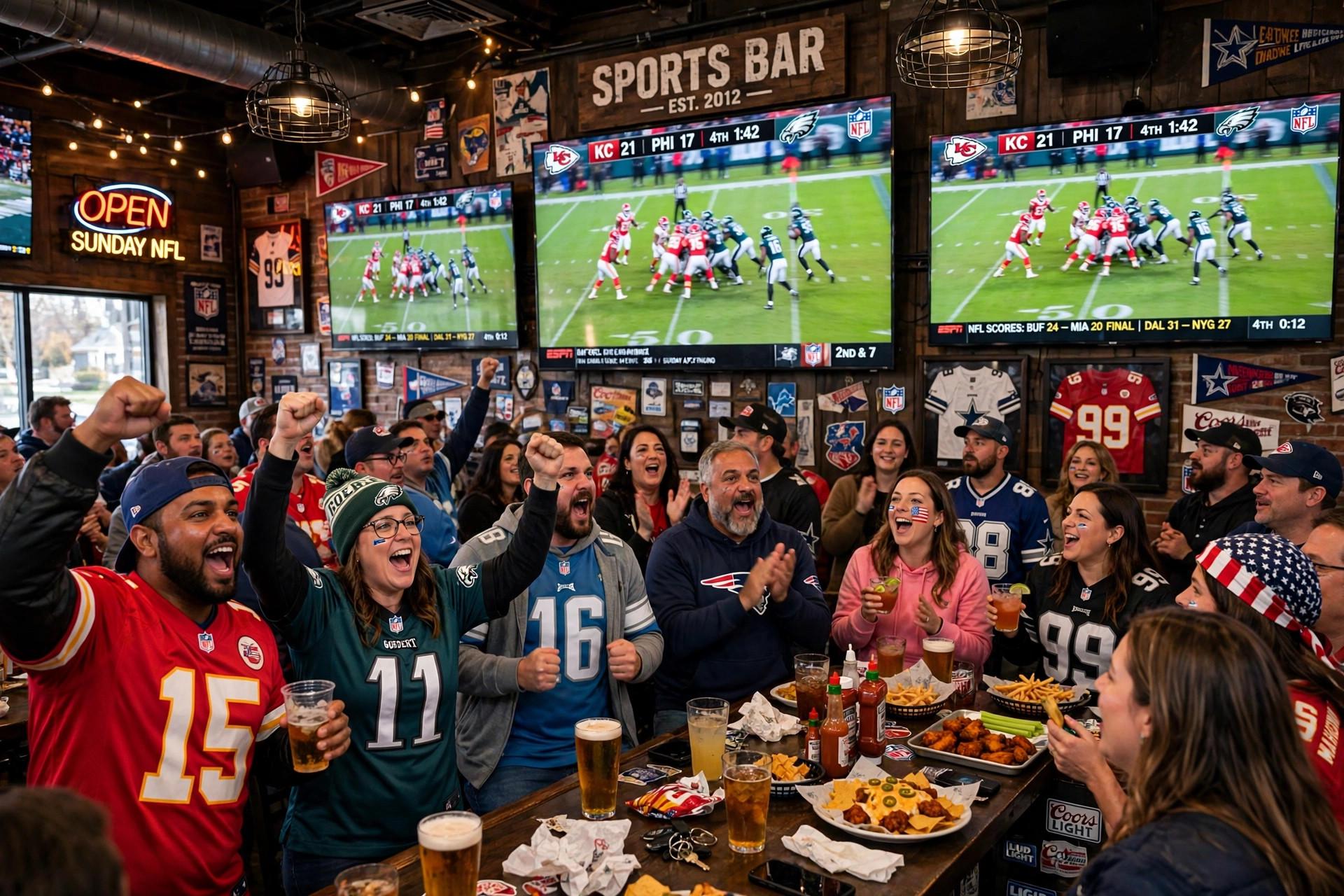
The NFL is the hardest reliability test in American TV. At 1 PM Eastern on a Sunday, the load on a sports server triples in ten minutes, and a provider with one overloaded server freezes for everyone at kickoff. A reliable service runs its NFL traffic on priority anti-freeze servers with spare capacity held back for Sunday, so the 1 PM games on CBS and FOX, the late games, and Sunday Night Football on NBC all play clean. Open the channel thirty minutes before kickoff, set the buffer to Large, and use Ethernet — then count the freezes. Zero across the whole Sunday means the service is built for football.
The playoffs raise the bar again. The Conference Championships and the Super Bowl are the two biggest streaming nights of the year, and a service that survives a regular Sunday can still fail on Super Bowl Sunday, when the audience doubles. Test the trial on a playoff Sunday if you can, and start the stream an hour early for the Super Bowl. Our NFL guide covers the game-day preparation in detail.
NBA and the fourth quarter
Basketball reliability is decided in the fourth quarter, when the audience peaks, the game is close, and the data rate spikes with every fast break. A service that freezes in the last five minutes has failed the test, whatever happened in the first three quarters. Watch a full game during the trial — a Lakers-Celtics matchup on ABC, a playoff game on TNT — and count the freezes after the two-minute warning. A reliable service holds the fourth quarter clean because its servers have room to absorb the surge, and the trial on a close game is the only proof that matters.
- Watch a full NFL Sunday from the 1 PM games through Sunday Night Football.
- Count the freezes in the fourth quarter of an NBA game on TNT.
- Open the player stats and confirm 60 frames per second for sports.
- Test a UFC pay-per-view night on ESPN+ if one falls during your trial.
- Message support during a game and time the reply.
Picture quality matters for basketball too. The ball must stay round during a fast break, the court lines must stay straight, and the stream must run at 60 frames per second — US basketball broadcasts at 60 fps, and a 30 fps stream looks jerky on every play. Check the player stats in TiviMate or IPTV Smarters Pro during the game, and confirm the frame rate before you blame your TV. Our NBA guide explains the full test.
MLB, NHL and the long season
Baseball and hockey test reliability over months, not minutes. An MLB season runs 162 games per team from April to October, and an NHL season runs 82 games plus the playoffs — a service must hold steady for six months, not one night. The channels matter here: MLB Network, ESPN, FOX and your regional sports network for baseball; ESPN, TNT and your RSN for hockey. Check all of them during the trial, and watch a full nine innings or three periods. A service that is reliable in April and still reliable in September is maintained daily; a service that degrades over the season is not.
Rain delays and overtime test the guide as much as the stream. A baseball game delayed by rain shifts the start time, and a hockey game that goes to overtime runs past the scheduled end — a good EPG updates in real time, while a stale guide shows the next program starting on top of the game. Check the guide during a delayed game and confirm it follows the real schedule. Our EPG guide explains how to test guide accuracy.
Soccer: early mornings and big tournaments
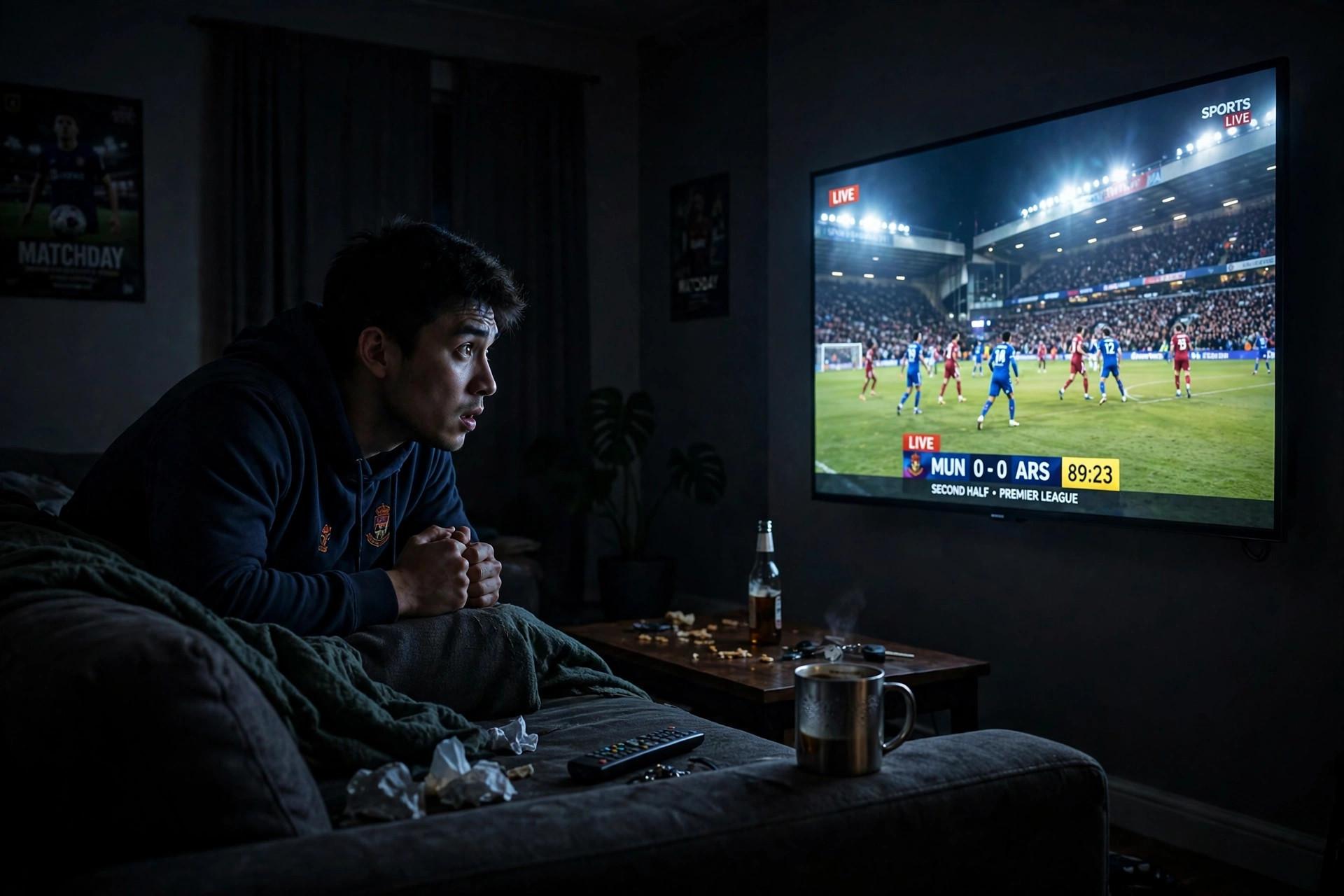
Soccer fans watch at hours other fans never see: Premier League games at 7:30 AM Eastern on Saturday, Champions League at 3 PM on weekdays, and the World Cup at all hours in the summer. A reliable service must be awake at 7 AM, with servers ready before the American audience wakes up. Test the trial on a Saturday morning: open the Premier League game at 7:30 AM and count the freezes in the first half. A service that is clean at dawn is staffed around the clock, and a service that freezes at 7:30 AM has no one watching the servers until noon.
Tournaments raise the stakes further. The World Cup, the Euros and the Champions League final draw audiences that dwarf a regular Saturday, and the servers feel it. A service that survives a Champions League final has proven its capacity, and the trial during a big tournament game is the strongest test available. Our soccer guide covers the leagues, the channels and the kickoff times.
UFC, boxing and pay-per-view nights
Pay-per-view is the ultimate reliability test, because the audience arrives in a single wave in the hour before the main event, and the stream must hold through five rounds or twelve. A UFC event on ESPN+ or a boxing match on pay-per-view will freeze a weak service in the main event, when the price of failure is highest. Test the trial on a fight night if one falls during your 24 hours: open the prelims early, let the buffer fill, and watch the main event to the final bell. Zero freezes across five rounds means the servers have real spare capacity.
Prepare for a fight night the same way as a Super Bowl: restart the Firestick and the router on the day before, open the channel an hour early, use Ethernet, and set the buffer to Large. Keep support on WhatsApp ready — a message during the main event should get an answer in minutes, not hours. A service that charges for the event and then freezes during it has failed the only test that matters, and the refund policy is there for exactly that case.
The one-week sports test
One game is a hint; one week is proof. Test the trial across a full week of sports: an NFL game on Sunday, an NBA game on Tuesday, an NHL game on Wednesday, a soccer game on Saturday morning, and a pay-per-view if one falls in the week. Count the freezes each night and write them down. A service that is clean five nights out of five is reliable. A service that freezes twice in a week will freeze twice a week for the next year, and the pattern will not improve on its own.
Compare the trial with your current service on the same nights, on the same TV. Open the same game on both and watch the first quarter side by side. The difference in freezing and opening speed is usually obvious within ten minutes, and it is the most honest comparison you can make. Our guide to testing any service has the full one-evening plan, and the plans page shows the Premium servers built for game day.
Price vs reliability for sports fans
A sports fan should never buy the cheapest service, because the cheapest service is the one that freezes during the game that matters. Premium at $19.99 a month, or $99.99 for the year, pays for the spare servers, the load balancing and the technicians who watch the load during games. A year of Premium costs less than two tickets to one NFL game, and it covers every game of every sport for the whole season. The $10 a month saved on a cheap service buys a frozen screen during the Super Bowl — the most expensive saving in television.
Start with one month, test it across a full week of sports, and upgrade to the year only when the trial proves the service holds. The yearly plan at $99.99 is there when you are ready, and the multi-device plans at $159.99, $224.99 and $269.99 cover the whole household. Compare the plans and let the games decide — the service that survives the week earns the year.
Keep the trial notes after you subscribe, because they become your baseline for the season. If a service that was clean in September starts freezing in January, the notes tell support exactly what changed, and a message with both sets of numbers gets a faster fix than a complaint with no history. A reliable service stays reliable all season, and the notes are how you prove it — to the provider, and to yourself before you renew.
Tournaments are where reliable services separate from the rest. The World Cup, the Euros, and the Champions League final draw audiences that dwarf a regular Saturday, and the servers feel it in the first minute of the match. A service that survives a group-stage game can still fail on the final, when everyone who skipped the early rounds shows up at once. Test the provider on the biggest night you can before you commit: a final, a Game 7, or a Super Bowl, watched on your main TV at peak time. Keep the same notes as a regular Sunday, and compare the two: if the numbers hold on the biggest night, they will hold the rest of the year. The trial costs nothing, the notes take five minutes, and the yearly plan is a decision you make with evidence instead of hope.